

When people think of Dubai’s art scene, galleries usually get most of the attention. The reality is that some of the city’s most interesting street art in Dubai is outside.
You do not need a ticket, a guided tour, or even a detailed plan. Some of Dubai’s best murals are hidden in residential neighbourhoods, stretched across warehouse walls, or tucked between cafés, shops, and apartment buildings.
If you are willing to spend an afternoon looking up instead of rushing to the next attraction, you will discover a side of Dubai that many visitors miss entirely.
The city’s street art scene is not concentrated in one district. Instead, it is spread across several neighbourhoods, each with its own character and style. Some areas feel polished and curated, while others reward wandering and a bit of curiosity.
If you are interested in photography, public art, or simply seeing a different side of Dubai, these are the places to start.
Al Karama
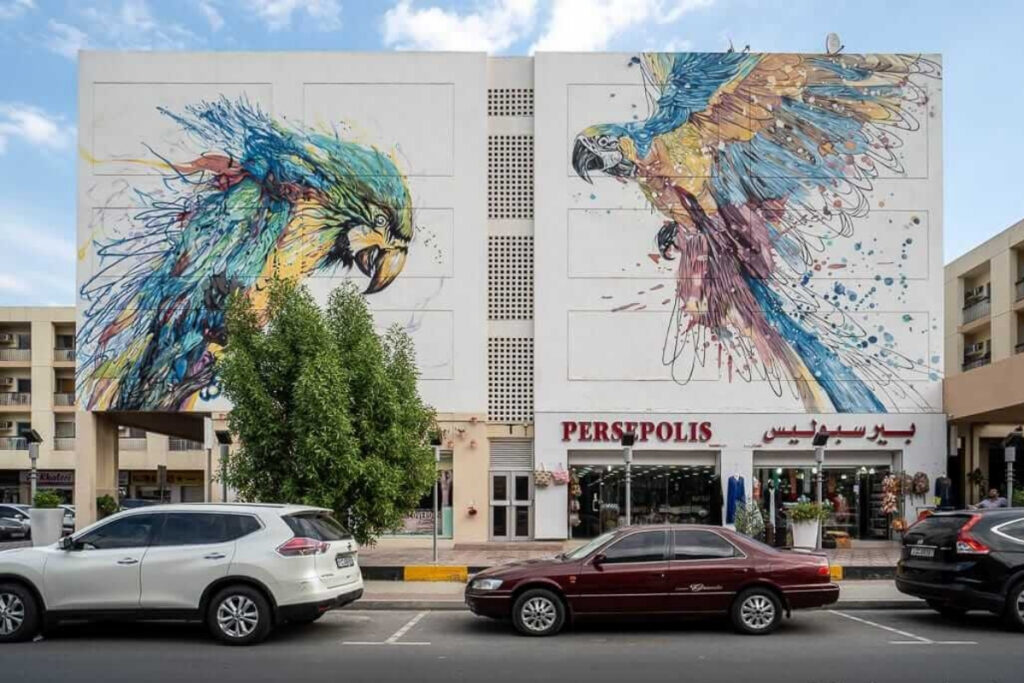
If you only have time for one area, make it Karama.
The neighbourhood became the centre of Dubai’s Street Museum project, which brought artists from around the world together to create murals inspired by Emirati culture, local traditions, and life in the UAE. Unlike a traditional outdoor art park, the artwork was painted directly onto existing residential and commercial buildings.
In Al Karama, the murals feel woven into everyday life. People are heading to work, grabbing groceries or meeting friends for coffee while these huge pieces of artwork exist around them.
The best approach here is simple: put away the map and wander.
Al Quoz
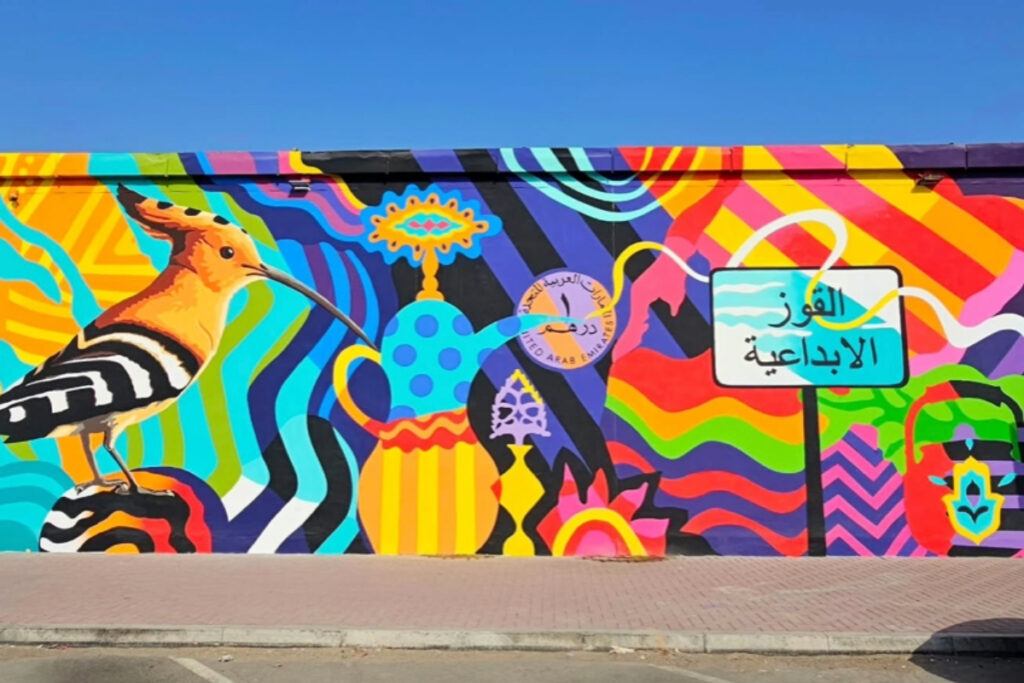
If Karama is the heart of Dubai’s street art scene, Al Quoz is its creative playground.
Known for its galleries, warehouses and industrial character, the area offers artists something that is difficult to find elsewhere in the city – massive walls. The result is artwork on a completely different scale.
Most people visit Al Quoz for Alserkal Avenue, and for good reason. It remains one of Dubai’s most important cultural destinations. That said, some of the most memorable pieces are often found outside rather than inside the galleries themselves.
Every time you are in Al Quoz, you will find yourself looking up at the warehouse walls just as much as you are looking at what is hanging inside the galleries. The industrial setting gives the murals a dramatic backdrop, and because the area continues to evolve, there is usually something new to discover.
If you already enjoy contemporary art, this is probably the area you will appreciate most.
Jumeirah Beach Residence (JBR)
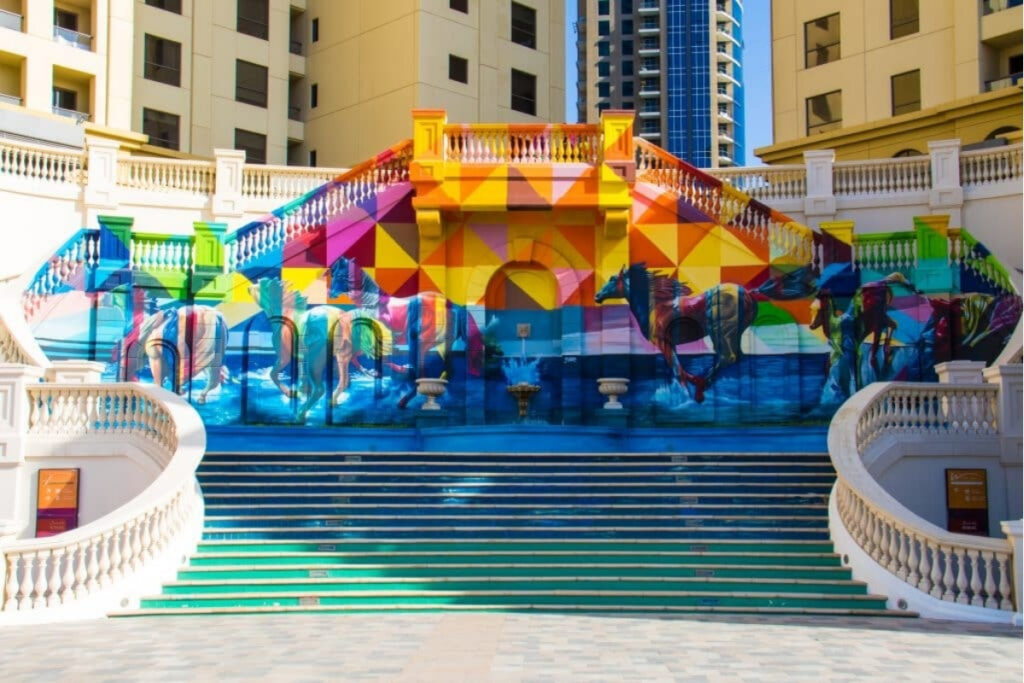
JBR is better known for beaches, restaurants, and waterfront walks, but it is also home to a growing collection of public art.
What makes the murals here different is their setting. You can spend the morning by the beach, stop for lunch, and stumble across large-scale artwork without ever setting out specifically to find it.
The pieces range from colourful contemporary designs to murals influenced by local culture and nature. While they may not be as concentrated as those found in Karama, they add an extra layer of personality to one of Dubai’s busiest neighbourhoods.
If you are already spending the day in JBR, take a little time to wander instead of heading straight from the beach to lunch. Some of the artwork is easy to miss when everyone is focused on the waterfront.
City Walk
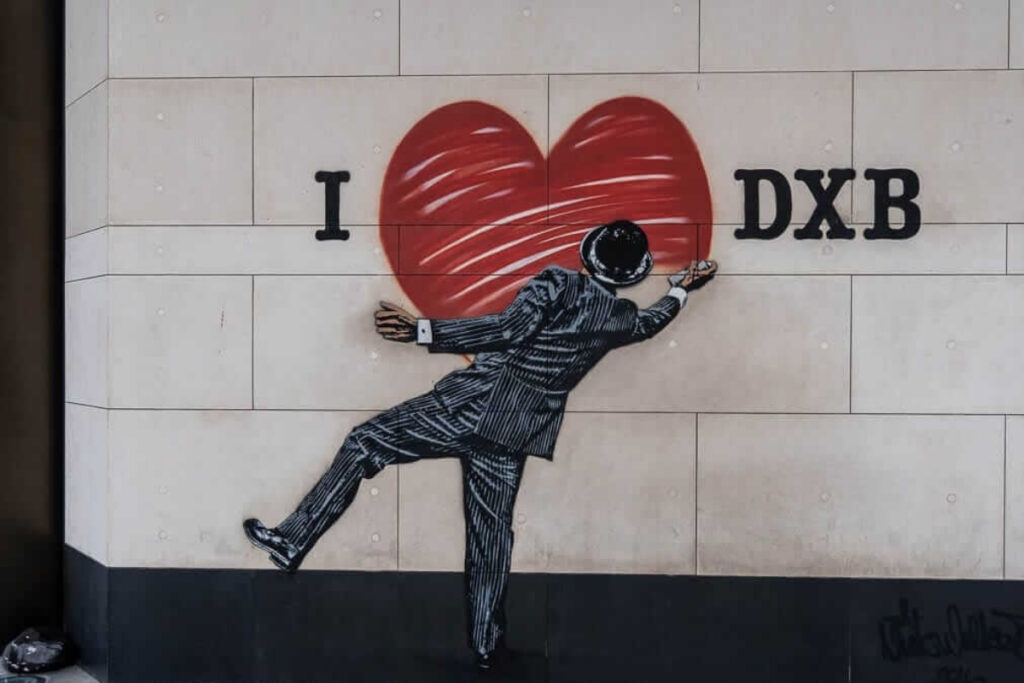
City Walk is probably the easiest place on this list to explore.
The district blends shopping, dining, and public art in a way that feels intentional rather than separate. Murals and installations are integrated into the streetscape, so you naturally encounter them as you move through the area.
City Walk makes art feel accessible. You do not need to dedicate an entire afternoon to searching for murals. You can simply enjoy the neighbourhood and discover pieces along the way.
It is also one of the most photogenic locations in the city, particularly in the late afternoon when the streets become livelier and the lighting softens.
For visitors who are not interested in spending hours mural hunting, City Walk offers an easy introduction to Dubai’s public art scene.
Satwa
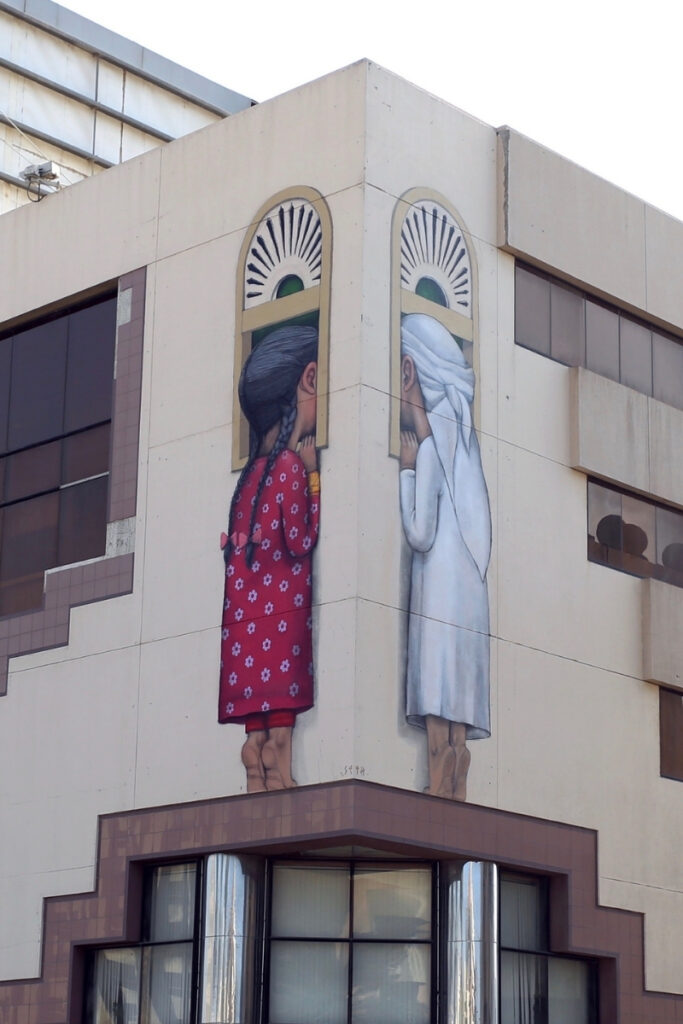
Satwa does not always appear in conversations about Dubai’s art scene, which is exactly why it deserves a mention.
Long before many of the city’s newer developments appeared, Satwa was known for its strong community atmosphere, independent businesses, and cultural diversity. The murals found here reflect that character.
The artwork feels less polished and less curated than some of the larger commissioned projects elsewhere in Dubai, but that is part of the appeal. It feels connected to the neighbourhood rather than designed primarily for visitors.
A walk through Satwa often turns into something more than a mural hunt. You notice local bakeries, long-standing restaurants, tailors and shops that have been serving the community for years.
That combination of street art, local businesses, and everyday community life is what makes Satwa stand out.
A Different Side of Dubai
Dubai’s street art scene challenges the assumptions people often have about the city. Visitors arrive expecting skyscrapers, luxury hotels and giant shopping malls.
Those things are certainly part of Dubai, but they are not the whole story. The murals scattered across neighbourhoods like Karama, Al Quoz, and Satwa reveal a more creative and personal side of the city.
Unlike art galleries, street art is available to everyone. There are no opening hours, entrance fees, or guided tours required. Some of Dubai’s most impressive artwork is simply waiting around the next corner.
Whether you spend an afternoon wandering through Karama, exploring Al Quoz, or stumbling across murals during a beach day at JBR, slowing down and paying attention can completely change how you experience the city.
Before visiting, it is always a good idea to check for any redevelopment projects, temporary closures, or changes in access, as public artwork can occasionally be relocated or removed over time. For anyone looking to see a different side of Dubai, following the murals is one of the most enjoyable places to start.
Discover more hidden gems, cultural attractions, and unique experiences across the city with The Dubai Atlas.