
The Dubai Loop has officially entered the construction phase, marking a major step forward in Dubai’s plans to introduce a new underground transport network. Developed through a partnership between Dubai’s Roads and Transport Authority (RTA) and Elon Musk’s The Boring Company, the project is designed to offer a faster way to travel beneath some of the city’s busiest districts while helping ease traffic congestion on the surface.
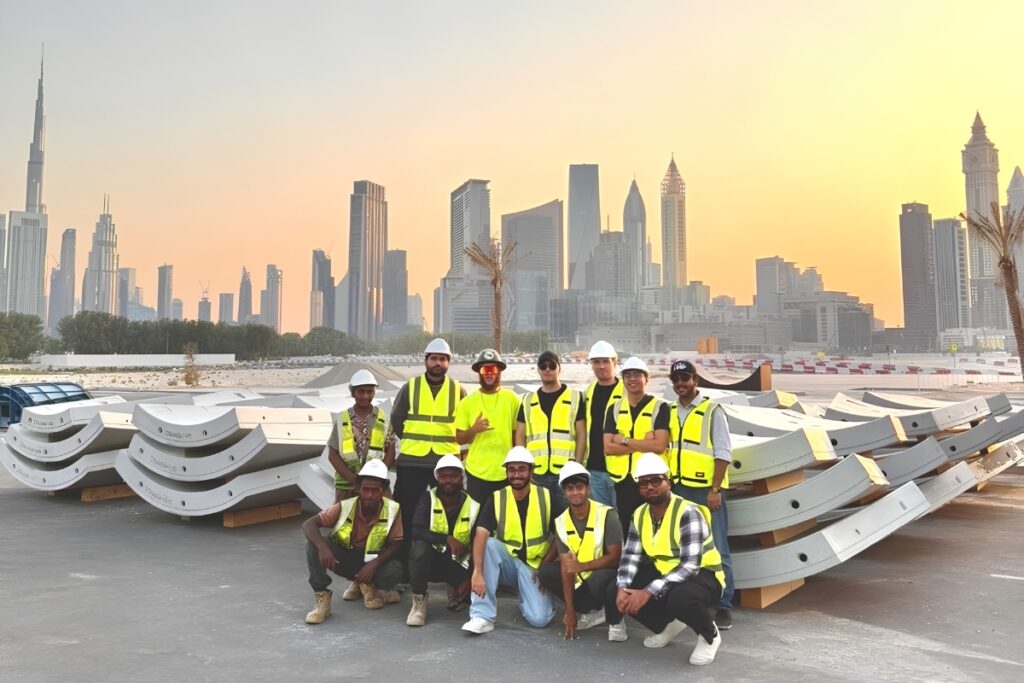
Work on the first phase is already underway, with production beginning on thousands of precast concrete tunnel segments that will form the lining of the underground route. Once complete, the pilot project is expected to introduce a high-speed, point-to-point transport system using autonomous electric vehicles instead of traditional trains.
What to expect from the first phase of the Dubai Loop
The first phase of the Dubai Loop will cover a 6.4-kilometre route connecting the Dubai International Financial Centre (DIFC) with the Dubai Mall. The journey, which currently takes around 20 minutes during busy periods, is expected to be reduced to just 3 minutes.
The pilot route will include four stations located at Burj Khalifa, DIFC 2, Zabeel Dubai Mall Parking, and ICD Brookfield Place.
The project is estimated to cost AED565 million (approximately US$153.8 million), with construction progressing towards an expected launch within the next two years. During its initial phase, the system is expected to serve around 13,000 passengers each day.
Passengers will travel in bookable autonomous Tesla electric vehicles that take them directly to their destination without intermediate stops, creating a different travel experience from conventional metro systems.
How the Dubai Loop will expand in the future
According to project updates, around 25,000 precast concrete tunnel segments, weighing a combined 45,000 tonnes, are being produced for the first phase. The tunnels will measure approximately 3.6 metres in diameter. They will be built using The Boring Company’s advanced Prufrock tunnel boring machines, which excavate the tunnels while simultaneously installing the concrete lining. This construction method is intended to minimise disruption to roads and daily traffic above ground.
The Dubai Loop is planned to expand well beyond the pilot route. In the future, the network is expected to grow into a 22-kilometre system featuring 19 stations, with extensions reaching areas including Business Bay and the Dubai World Trade Centre.
Once fully developed, the network is projected to carry up to 30,000 passengers daily, creating a new transport option that complements Dubai’s existing public transport network while supporting the city’s long-term mobility and growth plans.