

Dubai airport move to Al Maktoum 2032 is shaping up to be a defining moment for the city’s future.
Plans are steadily taking shape to move all operations from Dubai International Airport to Al Maktoum International Airport, and while it will not happen overnight, there is now a clearer idea of when things could start to shift.
The timeline points to 2032 as the point when the transition becomes real. That is when DXB is expected to reach its limits, making it more practical to begin a full move to Dubai’s next-generation airport.
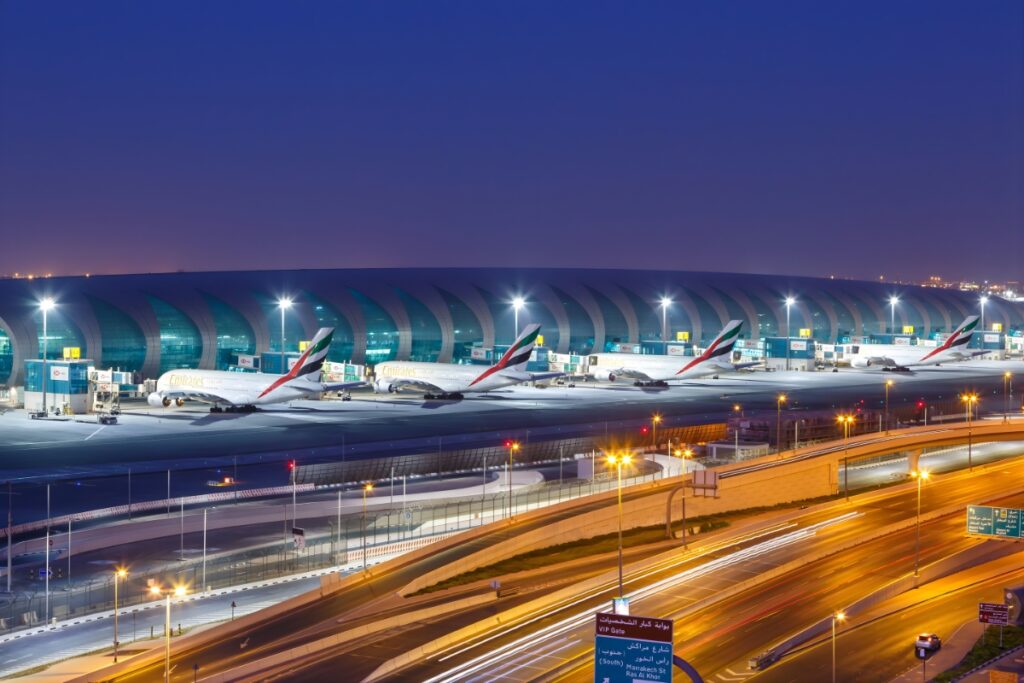
DXB is getting closer to capacity
Passenger numbers at Dubai International Airport have been climbing steadily, and the airport is on track to cross the 100 million mark in the near future. Projections suggest that the figure could reach around 114 million travellers a year by 2031.
At that stage, expanding further becomes increasingly difficult. Instead of stretching the current airport beyond its limits, the plan is to shift focus to a space built with future growth in mind.
A much bigger vision at Al Maktoum
That space is Al Maktoum International Airport, and the scale is on a completely different level. The airport is part of a Dhs128 billion development that is designed to eventually handle up to 260 million passengers annually.
To put that into perspective, it would make it the largest airport in the world by capacity.
The 2032 transition is only one step in that journey. The full build-out is expected to continue for years, with completion projected around 2057.
Airlines will move gradually
The shift will not be a single moment where everything changes. Instead, airlines will begin moving operations in phases.
As slots at DXB become harder to secure, carriers will be encouraged to operate more flights from Al Maktoum International Airport. Over time, this gradual shift is expected to build momentum until the majority of traffic is handled from the new airport.
Faster connections across the UAE
One of the key advantages of the new location is connectivity. Etihad Rail is expected to connect directly to the airport via a high-speed network, potentially reducing travel time between Dubai and Abu Dhabi to around 30 minutes.
This kind of infrastructure is designed not just to support Dubai but also travel across the UAE as a whole.
So what happens to DXB?
The future of Dubai International Airport remains open-ended, but it is unlikely to remain operational in the same form once the transition is complete.
Running two major airports so close to each other does not make much sense in the long term. By the time the shift occurs, many of DXB’s facilities are expected to be nearing the end of their lifespans, requiring significant investment to maintain.
There has been interest in redeveloping the site, but no official plans have been confirmed so far.
A shift that could reshape Dubai
Moving the airport south is not just about aviation. It is also about where the city grows next.
With limited room to expand in the northern parts of Dubai, development is already pushing towards Dubai South. Relocating the main airport could accelerate that shift, changing how people move around the city and where future communities take shape.
This move is not just a transport update. It is part of a much bigger picture that will influence how Dubai grows, connects, and positions itself in the years ahead.