


The Perseid Meteor Shower 2026 is giving skywatchers across the UAE and wider Middle East a chance to see one of the most dependable meteor displays of the year. The shower reaches its peak overnight on August 12 and into August 13, with this year’s new moon creating darker skies and better conditions for spotting faint meteors.
You will not need a telescope or any specialist equipment. The biggest challenge is simply finding somewhere dark, comfortable and away from the bright lights of the city.
When can you see the Perseids in the UAE?
The official peak is expected during the early hours of August 13, although the exact maximum falls around or after sunrise in the UAE. The shower has a broad peak, so you do not need to catch one particular moment.
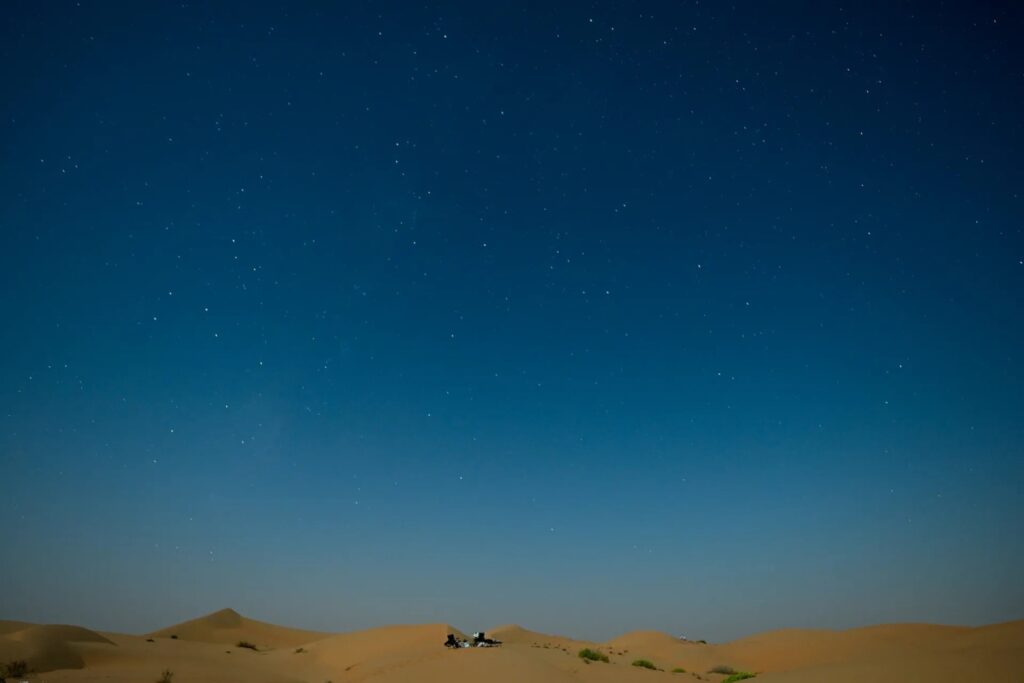
For UAE viewers, the most practical window is around 1 am until shortly before dawn on August 13. Activity generally becomes stronger after midnight as the shower’s radiant rises higher in the sky.
The Perseids remain active until August 24, so there are still opportunities to spot meteors after the peak, although numbers will gradually decrease.
Where should you watch?
Getting away from Dubai and Abu Dhabi’s bright skyline will make a significant difference. Some UAE options include:
- Al Quaa: One of the UAE’s darkest locations, although it requires a longer drive.
- Al Khatim Desert: A practical desert option between Abu Dhabi and Al Ain.
- Al Qudra and Al Marmoom: Convenient choices from Dubai if you move away from heavily lit areas.
- Hatta: The mountains offer a darker setting and wide open views.
- Jebel Jais: An elevated northern option with expansive skies.
- Mleiha: Sharjah’s desert landscape is another popular setting for stargazing.
If you are heading into the desert, stick to established routes, carry plenty of water and make sure your vehicle has enough fuel.
How many shooting stars could you see?
Under ideal conditions, the Perseids can produce around 50 to 100 meteors per hour, with some particularly bright fireballs. That figure is based on excellent viewing conditions, so city dwellers are likely to see far fewer.
Cloud, humidity, dust, artificial light and buildings can all reduce visibility. The darker the surroundings, the better your chances.
How to get the best view
Once you arrive, give your eyes about 30 minutes to adjust to the darkness. Put your phone away, get comfortable and look across a wide section of sky rather than focusing only on Perseus.
The meteors appear to originate from the direction of the Perseus constellation, but they can travel across almost any part of the sky. A wide, unobstructed view is therefore more useful than trying to watch one specific spot.
The Perseids are created as Earth passes through debris left behind by Comet 109P/Swift-Tuttle. As these tiny particles enter the atmosphere at roughly 59 kilometres per second, they heat up and create the bright trails we know as shooting stars.