


Dubai Municipality has launched the Dubai nanoparticle detection laboratory as part of its efforts to strengthen food safety standards and enhance regulatory oversight across the emirate’s food sector.
Operated by Dubai Central Laboratory, the new facility uses advanced ICP-MS technology to detect titanium dioxide nanoparticles in processed food products accurately. The laboratory can deliver test results in less than five minutes, allowing authorities to respond more quickly to food safety requirements while supporting Dubai’s position as a leader in laboratory testing and quality assurance.
The initiative comes at a time when nanotechnology is being increasingly used in food manufacturing to improve product characteristics such as colour, texture, and stability. By expanding its testing capabilities, Dubai Municipality aims to ensure that food products available in the market continue to meet approved safety and quality standards.
Faster and More Accurate Food Testing
The laboratory relies on advanced analytical technologies that can measure particle size, distribution, and other physical and chemical properties with a high degree of accuracy. These capabilities enable specialists to distinguish between conventional titanium dioxide and nanoparticle-sized forms used in processed food products.
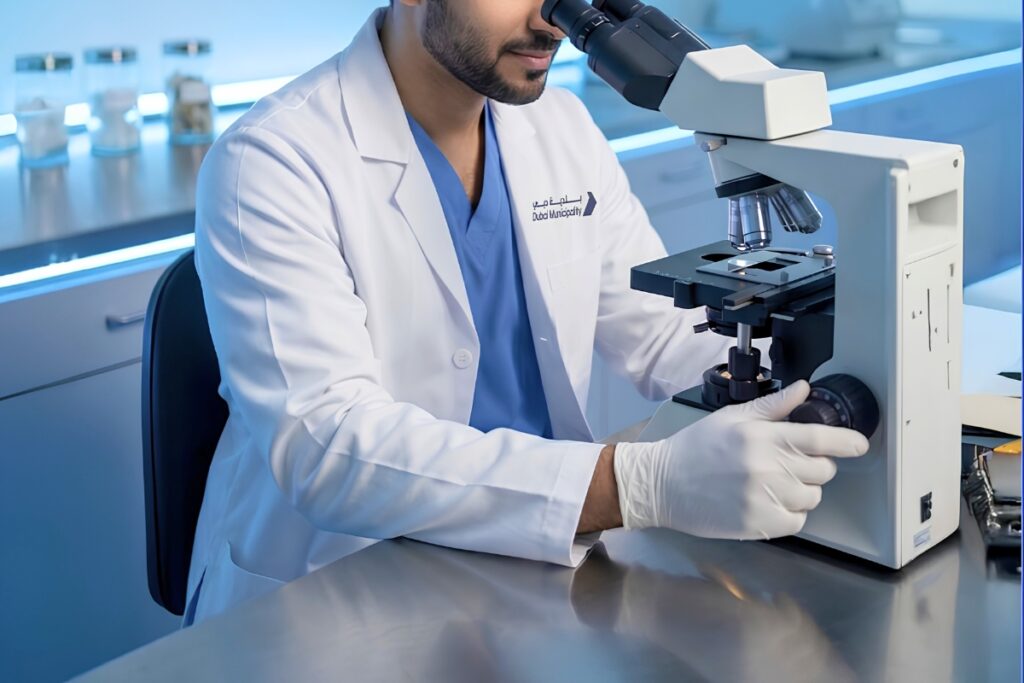
According to Dubai Municipality, the facility can process approximately 60 samples per day, with capacity increasing to 100 samples daily during emergencies. The ability to complete testing quickly helps accelerate regulatory procedures and supports decision-making based on reliable scientific data.
Eng. Hind Mahmoud Ahmed, Director of the Dubai Central Laboratory Department, said the new laboratory represents an important addition to the specialised services offered by Dubai Central Laboratory. She noted that the facility will support regulatory authorities and partners in both the public and private sectors through advanced analytical solutions that keep pace with technological developments.
Supporting Future Research and Innovation
Beyond food testing, the laboratory is expected to support future research and applications involving nanoparticles in sectors such as cosmetics, pharmaceuticals, and packaging materials. The initiative could also contribute to the development of policies and regulations governing the use of nanotechnology in consumer products.
The launch follows the introduction of the ViruGenetics laboratory, the UAE’s first specialised facility for detecting foodborne viruses using advanced genomic technologies. Together, these investments highlight Dubai Municipality’s commitment to innovation, public health protection, and the continuous improvement of food safety and product quality across the emirate.