
What was once a quieter residential district centred around Jumeirah Golf Estates is now evolving into a key part of the city’s transport network, with the Jumeirah Golf Estates transport hub Dubai emerging as an important connection point.
Known for its golf courses and gated communities, the area is gradually taking on a new role as multiple transport systems begin to converge in one location. As Dubai continues expanding south, this shift is becoming harder to ignore.
Multiple transport systems coming together
One of the biggest changes comes from the planned expansion of the Dubai Metro. The upcoming Gold Line will run from Al Ghubaiba to Jumeirah Golf Estates, linking older parts of the city with its newer districts.
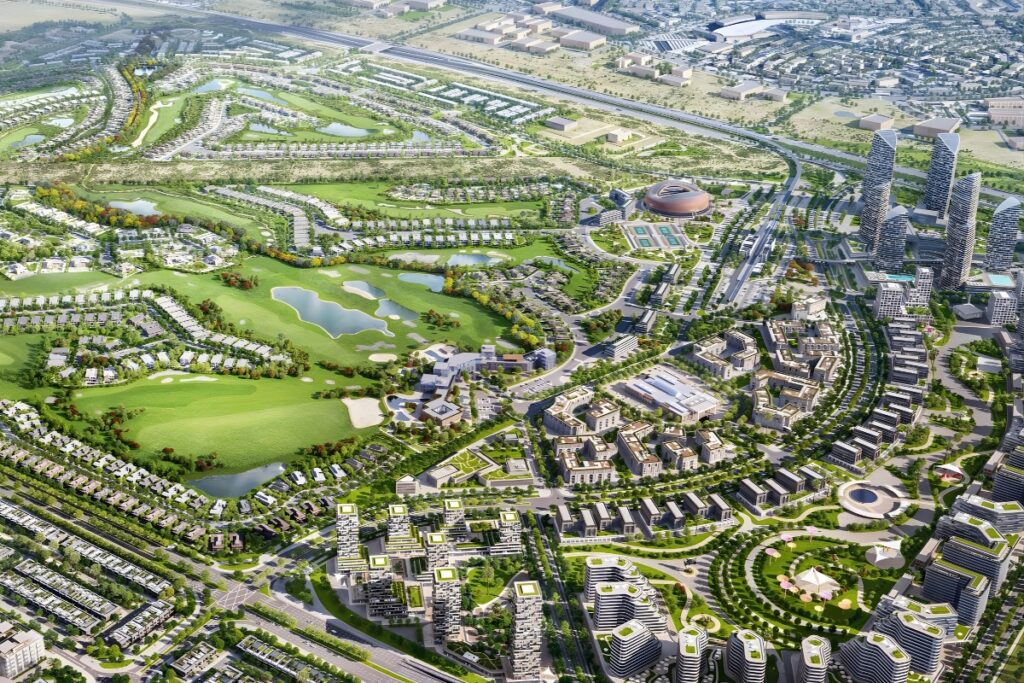
It will connect with the existing Red Line at Jumeirah Golf Estates Metro Station, turning the station into a more central interchange.
At the same time, a station for Etihad Rail is nearing completion nearby. A pedestrian link between the metro and rail stations is also in progress, making it easier to move between different modes of transport.
Together, these additions are shaping what is now being recognised as the Jumeirah Golf Estates transport hub Dubai, where local and intercity travel intersect.
A more connected way to move
Dubai’s transport strategy is shifting towards integration. Instead of separate systems, the focus is on making journeys smoother across different networks.
The Gold Line will connect several key areas across the city, while Etihad Rail is expected to link Dubai with other emirates. This combination creates a more flexible system that supports both daily commutes and longer journeys.
As more people move into newer communities, this kind of connectivity will become increasingly important.
Why this location matters
Jumeirah Golf Estates sits along Sheikh Mohammed Bin Zayed Road, one of the country’s main highways.
It is also close to major growth areas such as Dubai South and Al Maktoum International Airport, which is expected to play a larger role in the city’s future.
This positioning makes it well-suited to act as a connector between established parts of Dubai and newer developments further south.
More than just a transit point
What makes this development stand out is what could grow around it. Large areas of land near the station are still being developed, creating space for residential, commercial, and hospitality projects.
Over time, this could turn the area into a more active urban centre, rather than simply a place people pass through. Well-connected locations attract new businesses and communities, and this area is no exception.
What to expect next
Progress is already visible on site, particularly around the Etihad Rail station and its connection to the metro.
The Gold Line is expected to open in the early 2030s, which will further strengthen the role of the area within the wider network. As these developments come together, Jumeirah Golf Estates transport hub Dubai will likely become more central to how people move across the city.
A glimpse into Dubai’s next phase
This transformation reflects a broader shift in how Dubai is planning for growth.
By bringing together metro lines, rail, and road networks in one place, the city is building a system that is easier to navigate and better suited to future demand.
What was once a residential enclave is steadily becoming one of the more important links in Dubai’s evolving transport map.