


Dubai is home to restaurants serving almost every cuisine imaginable, but some of the city’s most interesting meals are rooted in the UAE’s own culinary traditions. Traditional Emirati food reflects the country’s desert, coastal, and trading heritage, with dishes built around rice, meat, seafood, wheat, dates, and aromatic spices.
The experience also extends beyond the food. Several Emirati restaurants in Dubai are housed in historic neighbourhoods or designed around the architecture and hospitality traditions of old Dubai. That makes them a good choice for visitors looking to understand the UAE through its food, as well as residents wanting to revisit familiar local flavours.
If you want to try dishes such as machboos, harees, balaleet, thareed, and luqaimat, these are some of the best traditional Emirati restaurants in Dubai to consider.
1. Al Khayma Heritage Restaurant
Al Khayma Heritage Restaurant offers one of the most immersive ways to experience traditional Emirati food in Dubai. Located in the Al Fahidi Historical District, the restaurant combines dining with a strong focus on local heritage. It is also recognised by the MICHELIN Guide with a Bib Gourmand for good-quality cooking and good value.
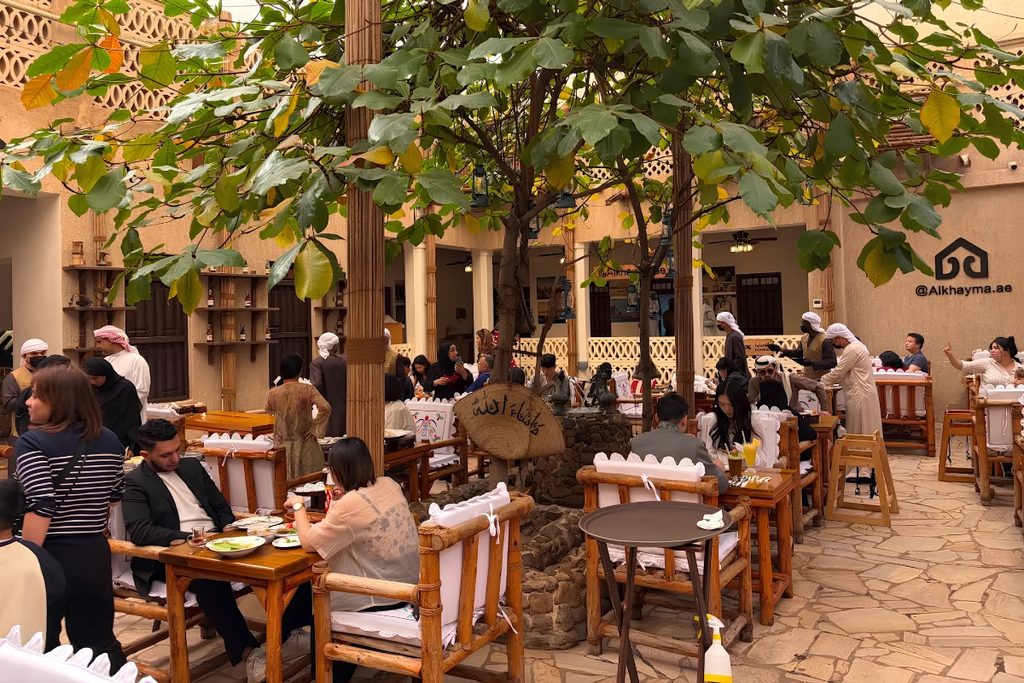
The restaurant occupies a heritage-style space with a covered courtyard, traditional details, and seating designed to reflect old Dubai. Fresh bread is prepared in view of diners, while staff dressed in traditional clothing and live music add to the cultural atmosphere.
The food focuses on rustic Emirati recipes, making this a good place to start if you are new to the cuisine. The lamb machboos is one of the MICHELIN Guide’s recommended dishes and works particularly well for sharing. Luqaimat and sticky date pudding are popular choices for dessert.
- Location: Villa 54-44, Al Fahidi Historical District, Dubai
- Timings: Daily, 8 am to 11 pm
- Entry: No entry fee. You pay for your food and drinks. The restaurant manages its own bookings, and reservations can be made directly with the venue.
What to order: Lamb machboos, traditional breads, luqaimat and sticky date pudding.
2. Arabian Tea House
Arabian Tea House has been serving Emirati and Arabic cuisine in Dubai since 1997. Its original Al Fahidi location remains one of the city’s most recognisable spots for traditional food, particularly for breakfast and leisurely daytime meals. The restaurant is also featured by Dubai’s Department of Economy and Tourism as one of the places to explore during an Old Dubai food experience.
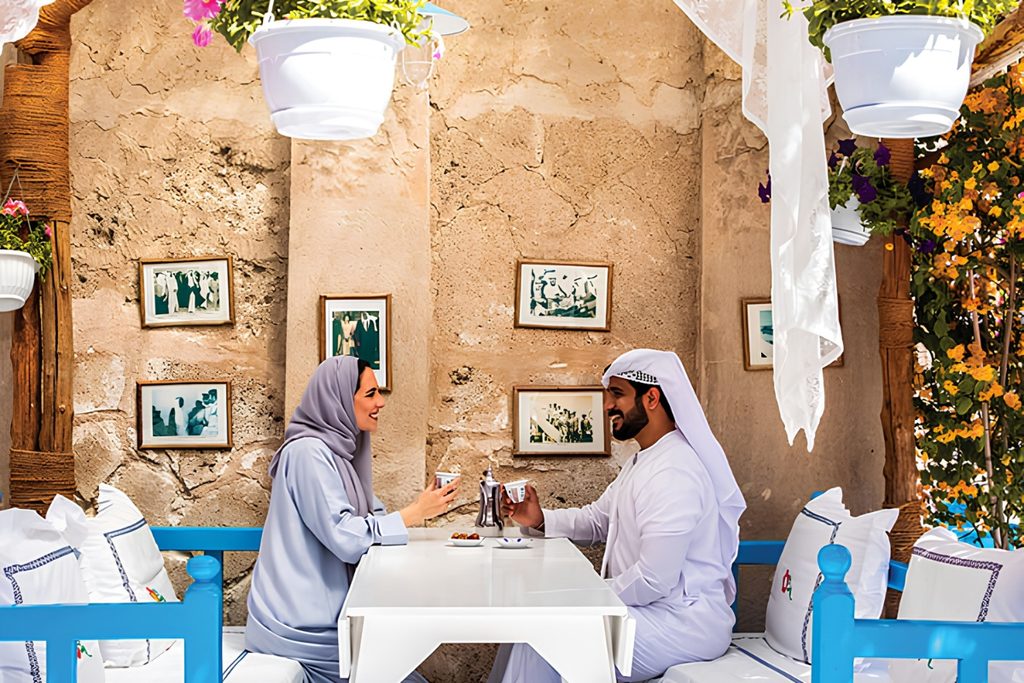
The setting is a major part of its appeal. The Al Fahidi branch sits within a traditional neighbourhood and is designed around a shaded courtyard with greenery, white furniture, and turquoise details. The atmosphere is calm and a considerable distance from the busy pace of modern Dubai.
Its menu covers traditional breakfast dishes, main courses, drinks, and sweets. Emirati breakfast trays are a convenient way to sample several flavours at once, while balaleet offers a classic combination of sweet spiced vermicelli and egg. Arabic coffee and karak tea are also worth ordering alongside the meal.
- Location: Al Fahidi Street, Bur Dubai, opposite Musalla Post Office
- Timings: Daily, 7 am to 11 pm
- Entry: No entry fee. Walk-ins are accepted. Reservations are required only for groups of 10 or more and must be made at least 36 hours in advance; the restaurant does not accept reservations on Friday, Saturday, or Sunday.
What to order: An Emirati breakfast tray, balaleet, regag bread, Arabic coffee and traditional sweets.
3. Al Fanar Restaurant & Café
Al Fanar Restaurant & Café takes diners into a version of Dubai inspired by the period before the city’s rapid modernisation. Established in 2011, the restaurant was created to showcase Emirati recipes, heritage, and hospitality in a setting inspired by old Dubai.
The concept is particularly useful for first-time visitors because the restaurant combines the food with visual references to the UAE’s past. Its branches use heritage-inspired interiors, while the Al Seef location places the experience directly beside Dubai Creek.
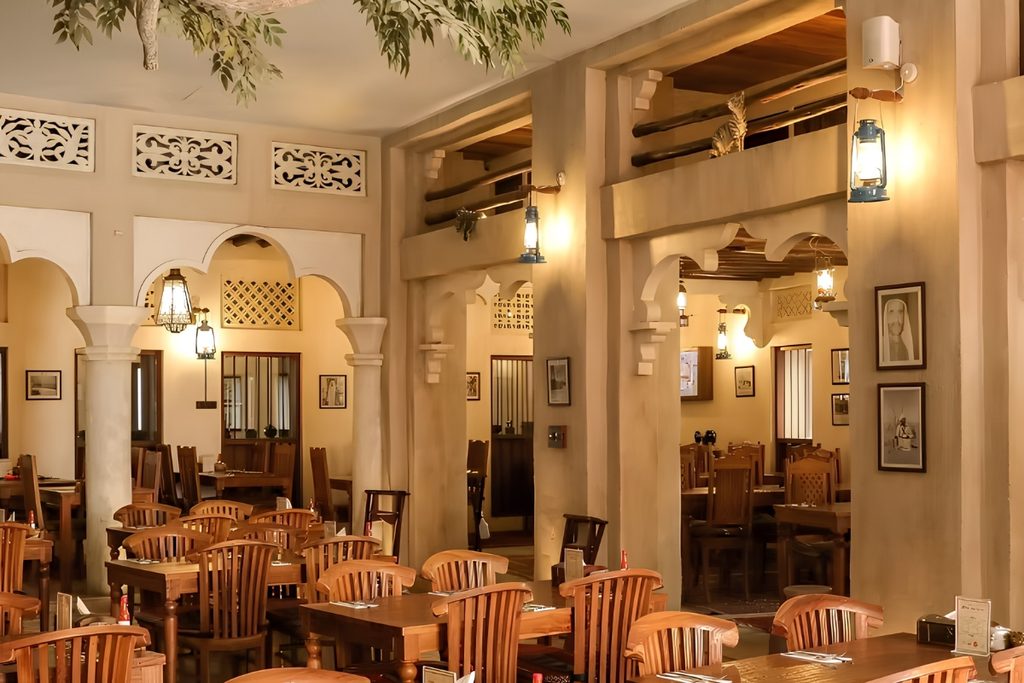
The menu covers a wide range of traditional Emirati dishes, including machboos, jesheed, seafood dishes, and luqaimat. The Al Seef branch has a particular focus on Emirati seafood, reflecting the coastal side of the country’s food culture.
There are currently three Dubai branches, at Dubai Festival City, Al Seef, and Al Barsha Pond Park.
- Location: Dubai branches at Dubai Festival City, Al Seef and Al Barsha Pond Park
- Timings: Al Seef, 9:30 am to 11 pm daily; Al Barsha Pond Park, 9 am to 9 pm daily; Dubai Festival City, branch hours vary and should be checked before visiting.
- Entry: No entry fee. Walk-ins are welcome, although the restaurant recommends reservations on weekends and holidays.
What to order: Machboos, jesheed, Emirati seafood, and luqaimat with date syrup.
4. Al Bait Al Qadeem Restaurant
Al Bait Al Qadeem is one of the more distinctive choices for anyone interested in the connection between Emirati food and Dubai’s history. The restaurant is located in Al Ras, close to the Gold Souk and Spice Souk, in a historic building dating back to 1909. Dubai’s official tourism website lists it as an old-style Arabic restaurant serving local Emirati food.
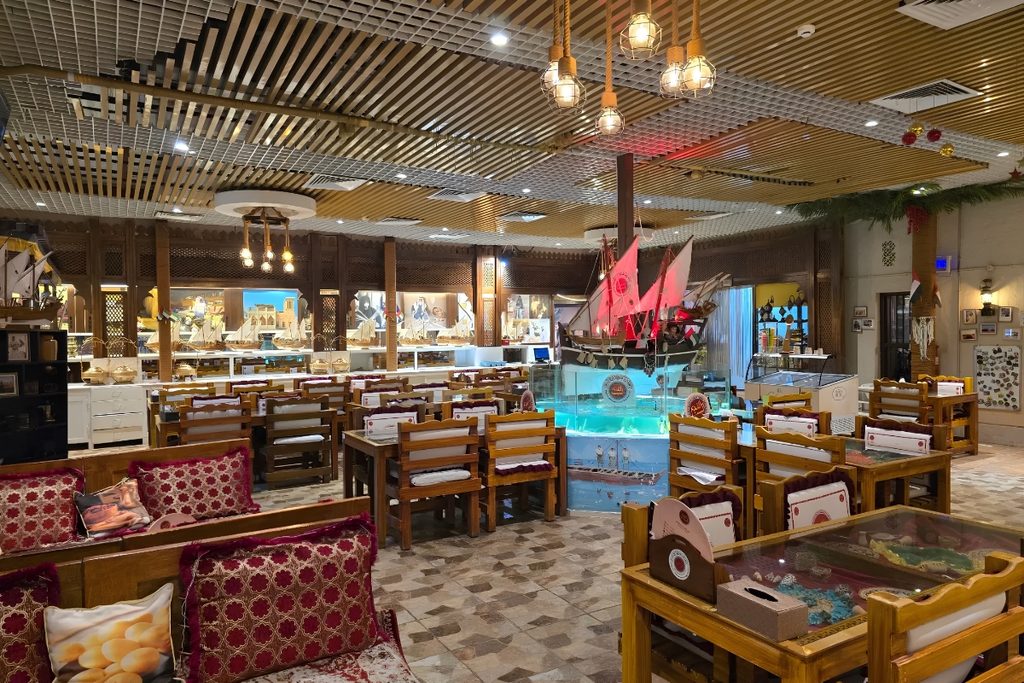
The historic setting gives the restaurant much of its character. Traditional seating and architectural details create a distinctly old-Dubai atmosphere, while its location in Deira makes it easy to combine a meal with a visit to the surrounding souks and heritage sites.
The menu is broader than strictly Emirati cuisine, reflecting the cultural exchange that has long shaped the area around Dubai Creek. Alongside local dishes, diners can find Persian, Yemeni, and Indian influences.
For an Emirati-focused meal, look for dishes such as machboos, salona, and regag bread. The restaurant also serves traditional drinks, including Arabic coffee and Moroccan tea.
- Location: Al Ras, Deira, close to the Gold and Spice Souks
- Timings: Generally open daily from around 8 am to 10 pm; check the restaurant’s current hours before visiting
- Entry: No entry fee. Guests pay for food and drinks, and walk-ins are accepted.
What to order: Machboos, Emirati-style salona, regag bread, and Arabic coffee.
5. Aseelah
For a more polished setting, Aseelah at Radisson Blu Hotel, Dubai Deira Creek, offers Emirati cuisine with a contemporary approach. The restaurant describes its menu as a combination of authentic Emirati food and Middle Eastern cuisine, with traditional flavours presented in a more modern setting.
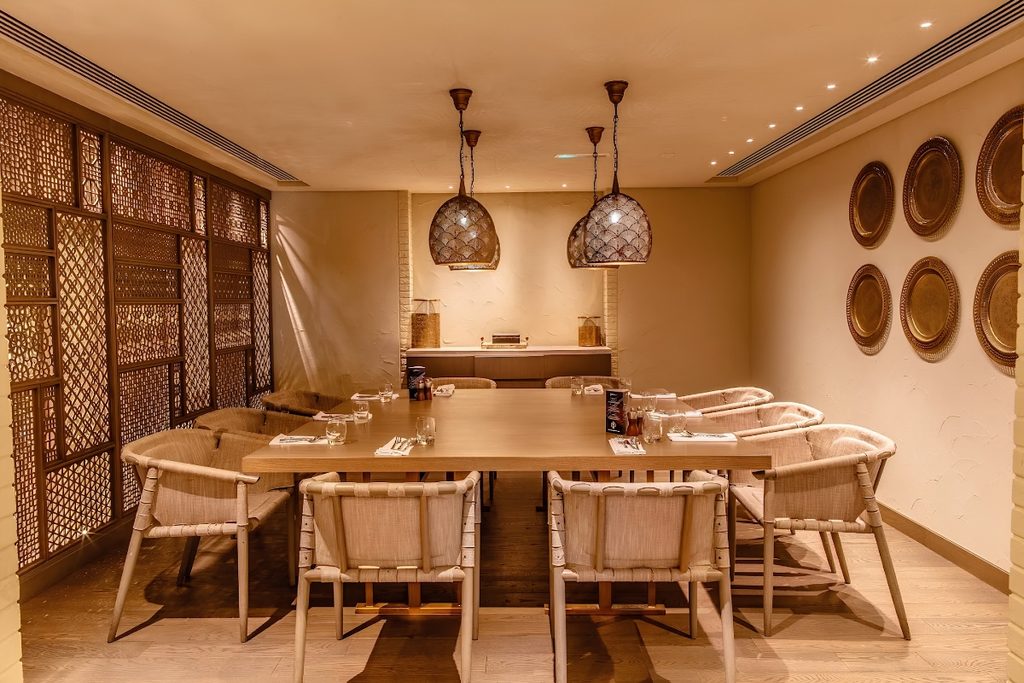
The restaurant is on Baniyas Road in Deira, giving it a natural connection to Dubai Creek and the historic trading district. Its interiors are more refined than the heritage-house restaurants on this list, with a glass-walled terrace adding another option for diners.
Aseelah is particularly useful for anyone who wants to try Emirati flavours in an upscale environment. Visit Dubai highlights its samak, a fish dish served with gravy and spiced rice, as one of the traditional flavours to try.
The restaurant also hosts special dining experiences and events. Its current official listing includes a Saturday brunch from 12:30 pm to 4 pm.
- Location: Radisson Blu Hotel, Dubai Deira Creek, Baniyas Road, Deira, Dubai
- Timings: Current official listings show a Saturday brunch from 12:30 pm to 4 pm; dining hours can vary by service, so check with the restaurant before visiting.
- Entry: No entry fee. Reservations are available through the hotel and are recommended for dining experiences and busy periods.
What to order: Samak with spiced rice and other traditional Emirati specialities on the current menu.
What should you try at a traditional Emirati restaurant?
If this is your first time trying Emirati food, it helps to know what to look for on the menu.
Machboos is one of the best-known dishes. It usually combines seasoned rice with meat, chicken, or seafood and gets much of its flavour from spices and dried lime.
Harees is made with wheat and meat that are cooked together until they reach a smooth, porridge-like consistency. It is especially associated with Ramadan and festive occasions.
Thareed combines thin bread with a rich stew and vegetables. It is a traditional dish with strong roots in Bedouin cooking.
Balaleet is a popular breakfast dish made with sweetened vermicelli flavoured with spices such as cardamom and saffron, usually served with egg.
Regag is a very thin traditional bread that can be paired with savoury or sweet ingredients, including egg, cheese, and honey.
Luqaimat is one of the UAE’s most recognisable desserts. These small fried dough balls are typically served with date syrup or another sweet topping.
And do not skip gahwa, or traditional Arabic coffee. It is an important part of Emirati hospitality and is commonly served with dates.
FAQs
What is traditional Emirati food?
Traditional Emirati cuisine includes dishes such as machboos, harees, thareed, salona, balaleet, regag, chebab, and luqaimat. Seafood also plays an important role because of the UAE’s long coastal and fishing heritage.
Which restaurant is best for a first taste of Emirati food?
Al Khayma Heritage Restaurant is a strong starting point because it combines traditional Emirati dishes with a heritage setting and has a MICHELIN Bib Gourmand.
Where can I find traditional Emirati food in Old Dubai?
Al Fahidi and Deira are two of the best areas to explore. Arabian Tea House and Al Khayma are in the Al Fahidi area, while Al Bait Al Qadeem is in Al Ras, close to Dubai’s historic souks. Dubai’s tourism authority also highlights Al Fahidi, Arabian Tea House, and Al Khayma as part of Old Dubai’s cultural food experience.
What is a good Emirati breakfast to try?
Look for dishes such as balaleet, regag bread, chebab, eggs, dates, and traditional breakfast platters. Arabian Tea House is particularly well known for its breakfast offering.
Is Emirati food very spicy?
Emirati food uses plenty of aromatic spices, including cardamom, saffron, turmeric, cinnamon, and dried lime. Most traditional dishes are flavourful rather than intensely hot.
Are these restaurants suitable for families?
Yes. Traditional Emirati restaurants generally offer sharing dishes and relaxed dining environments. Al Fanar specifically describes its Dubai branches as family-friendly.
Can I visit these restaurants without a reservation?
Many accept walk-ins, but booking is sensible during weekends and busy periods. Arabian Tea House has a specific reservation policy for groups of 10 or more, while Al Fanar recommends reservations on weekends and holidays.
Which Emirati dish should I try first? Start with machboos if you want a hearty main course, balaleet for breakfast, harees for something comforting, or luqaimat if you want to begin with dessert.
Follow The Dubai Atlas for more guides to Dubai’s best restaurants, local food, hidden gems, and things to do across the city.